

Waste or Wealth?
Is anyone looking for 'Eco-Rations' in Premium Luxury

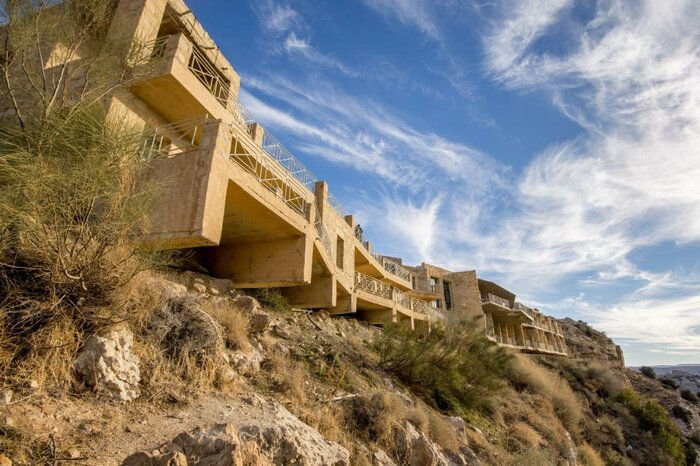
Image Credit: Soneva / @Soneva
Luxury is no longer measured by waste. It’s measured by intent.
We have officially entered the "Era of High Life Worth." In the legacy hospitality model, luxury was defined by material abundance and a license to waste. No where is this more visible than the great breakfast buffets stretching from Sydney to Maldives, Bangkok to Dubai.
Today, with the UAE's 2026 nationwide single-use plastic ban fully enforced and CSRD Scope 3 carbon auditing active, the operational baseline has shifted. But let's be entirely honest: if your sustainability strategy leaves a premium guest feeling underwhelmed, your strategy has failed.
Reaching Net-Zero cannot mean replacing the legendary theater of a luxury breakfast with a sparse, eco-rationed continental tray. The modern high-net-worth traveler still demands a sense of awe.
Regional hotel groups are moving past superficial compliance and redesign the "Green Guest Journey" as a high-margin value-add, proving that we can deliver uncompromising luxury through masterfully engineered choices:
1. The Breakfast Paradox: Visual abundance vs. material waste
The bottleneck: How do you maintain that breathless first impression when a guest walks into a luxury breakfast restaurant, without throwing 40% of the food into a landfill at 11:00 AM?
The example: Mandarin Oriental Hotel Group (most notably at Mandarin Oriental, Singapore). They have integrated Winnow's AI-powered vision technology straight into their luxury kitchens. The AI automatically tracks precise batch-cooking intervals and overproduction trends.
The strategy: Instead of displaying deep, massive troughs of food, they utilize shallow, vertically tiered nested displays to keep the room looking visually exploding and abundant. High-waste categories are prepared A La Minute at live-cooking stations and circulated via roaming carts. The guest experiences more interaction and heightened theater, while food waste drops by over 36%.
2. Cultural Dualism: Balancing modesty with global expectations
The bottleneck: One of the most complex challenges for a regional Chief Operating Officer in the Middle East is balancing local GCC requirements, which demand visual privacy, discrete family spaces, and multi-generational layouts, with Western leisure preferences. They do not segment the market; they use Architectural Choice Architecture to seamlessly engage both.
The example: One&Only One Za'abeel (Dubai). They design luxury spaces using fluid, modular layouts. Utilizing heavy acoustic double-doors hidden in the structural woodwork, they can instantly convert independent premium rooms into sprawling, self-contained 4-bedroom private family compounds on demand.
The strategy: They isolate beach, dining, and pool zoning visually through clever biophilic landscaping (using indigenous Ghaf trees and date palms) rather than rigid walls. This allows international guests to enjoy open resort spaces while preserving absolute visual modesty, security, and acoustic privacy for families utilizing exclusive cabanas or private enclaves.
3. Invisible engineering: Climate control without compromise
The bottleneck: In intense tropical or desert climates, luxury is defined by flawless thermal and acoustic comfort. Lowering a carbon footprint cannot mean asking a premium guest to sacrifice ambient cooling or sweat through a humid night.
The example: Soneva (Soneva Jani, Maldives). Soneva operates completely carbon-neutral luxury island ecosystems. Instead of forcing guests to compromise, they deployed massive, state-of-the-art floating solar PV microgrids coupled with heavy industrial battery energy storage systems (ESS) seamlessly hidden out of sight.
The strategy: Inside the massive overwater villas, AI-driven climate-control networks track real-time occupancy and ambient daylight. The moment a guest steps out onto their deck, the villa instantly scales down HVAC cooling loads and switches off heavy circuits invisibly behind the scenes. Minutes before the guest returns, the automated microgrid drops the room temperature back to an immaculate, preset luxury standard. Comfort remains completely untouched, conserving the property's operational electricity which is generated cleanly from the sun.
4. Wellness & Biophilia: The suite as an ecosystem
The bottleneck: Air quality, sleep health, and non-toxic environments are now top-tier luxury expectations. Sustainability must be extracted from the plant room and integrated directly into the guest's physical well-being.
The example: Marriott Resort Palm Jumeirah (Dubai).
The strategy: By embedding biophilic design principles of living indoor vertical green walls that actively filter indoor air, chemical-free non-toxic organic textiles, and precision acoustic isolating engineering, they have turned environmental performance into a premium wellness amenity. The room actively lowers the guest's cortisol levels, proving that green building infrastructure directly enhances the luxury guest experience.
5. Radical Locality & Resource Circularity
The bottleneck: In an arid and tropical regions, true luxury is defined by how masterfully resource constraints are engineered out of the guest path without relying on carbon-heavy, long-distance global logistics.
The example: Jumeirah Group (across massive multi-property hubs like Madinat Jumeirah and Zabeel House The Greens).
The strategy: Rather than trucking in thousands of premium water brands from Europe, they deployed massive on-site, automated glass-bottling plants. By treating, mineralizing, and bottling water on-property, they eliminate millions of transport miles and single-use packaging items entirely. This operational choice elevates water service into an authentic story of local purity, zero-mile supply chains, and resource respect.
The Leadership Takeaway
True sustainability shouldn't feel like a sacrifice; it should feel like an upgrade. It is not about cutting back; it is about value engineering the experience.
By matching masterful backend engineering with modular cultural design, great hoteliers protect their net operating income (NOI) while delivering an authentic experience that captures the highest-LTV global and local travelers.
Is your brand still equating "Waste" with "Wealth," or are you value-engineering for the Conscious Traveler?


Comments