

The Mirage that Breathes: Qasr Al Sarab. Regenerative Luxury in 2026

Standing atop the dunes of the Rub' al Khali, the silence is profound. Beneath the stillness of Qasr Al Sarab Desert Resort by Anantara, a revolutionary "DNA" is at work.
Two years ago, the hospitality industry was obsessed with being "less bad", reducing plastic, cutting carbon, and saving water. Today, Qasr Al Sarab has proven that the future of travel isn't just about sustainability (staying the same); it’s about regeneration (leaving the world better).
In one of the most extreme environments on Earth, this resort has become a living ecosystem for circularity.
Here is how they did it, and the lessons every destination hotel can learn to survive the next decade.
From Sustainable to Regenerative: The Four Pillars
1. Ecological Re-wilding
Qasr Al Sarab has moved beyond simple conservation. Through active partnerships with the Environment Agency - Abu Dhabi, the resort has facilitated the release of Arabian Oryx and Sand Gazelles into protected desert corridors. They aren't just guests in the desert; they are expanding its biodiversity. By planting thousands of indigenous Ghaf and Sidr trees, the resort now acts as a massive carbon sink, stabilizing dunes and creating a cooling microclimate.
2. The "Blue" Economy
In a landscape defined by thirst, the resort has achieved water autonomy. By scaling Atmospheric Water Generation (AWG), they harvest pure drinking water directly from the desert air. Coupled with an on-site glass bottling plant that eliminated single-use plastics years ago, the "water mile" has been reduced to zero. Furthermore, 100% of greywater is recycled through AI monitored subsurface irrigation, feeding the desert greenery with surgical precision.
3. Living Soil & Circular Food
The resort no longer "disposes" of waste; it upcycles it. High-speed aerobic digesters turn 100% of organic food waste into nutrient-rich fertilizer. This has transformed "dead" sand into "living" soil for the resort's expanded permaculture greenhouses. Today, 85% of the greens served at the Al Falaj dining experience are grown within the Liwa oasis, powered by the resort's own compost.
4. Energy Sovereignty
To solve the challenge of 24/7 cooling, the resort has integrated sand battery storage. By storing excess daytime solar energy in the desert’s most abundant resource, silica sand, they generate carbon neutral power long after the sun sets. Every villa’s private pool is solar-heated, proving that high-end luxury can be powered entirely by the elements.
Lessons for Hoteliers
1. The Invisible Supply Chain
True circularity is won back-of-house. Qasr Al Sarab’s success stems from auditing every vendor. If a supplier uses non-biodegradable packaging, they are delisted. Your brand’s sustainability is only as strong as your weakest partner.
2. Turn Constraints into Signature Experiences
Qasr Al Sarab didn't hide the harshness of the desert; they made it the star. Harvesting water from air and eating "Regenerative Plates" grown in the sand aren't just eco-metrics, they are the primary reasons guests book. In 2026, responsibility is the new luxury.
3. "Net Zero" to "Net Positive"
The modern traveler wants to be part of the solution. By offering guests the chance to participate in Ghaf tree planting or wildlife tracking, the resort ensures that every stay leaves a measurable, positive impact on the Liwa ecosystem.
The Desert’s Lesson: Equilibrium
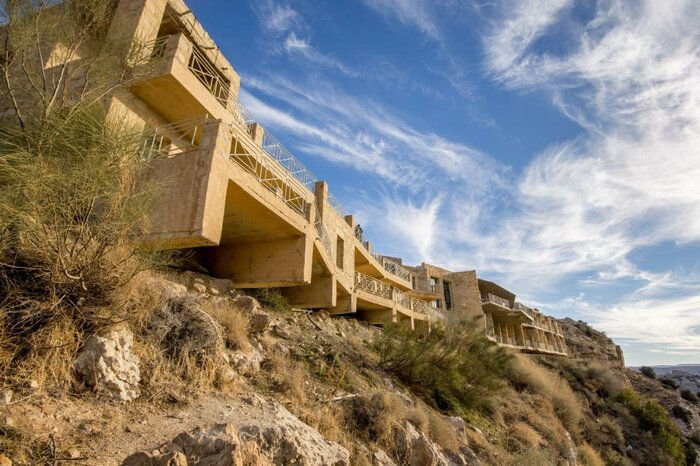
Looking at this fortress of a resort, the lesson is clear. The desert doesn't tolerate waste. For centuries, the Bedouin lived in perfect equilibrium with this land. Qasr Al Sarab has simply updated that ancient wisdom for the modern age.
The "Mirage" has become a roadmap. We no longer have to choose between the world’s most beautiful experiences and the world’s survival.
Defining the Next Decade
The pilot-program era is over. Qasr Al Sarab has debunked the myth that extreme luxury requires an extreme footprint.
As you audit your 2030 strategies, ask yourself:
Is your hotel a consumer or a producer?
Are you reducing your footprint, or are you actively healing your landscape?
Is sustainability a checklist, or is it your core narrative?
The future of travel isn’t just about seeing the world;
it’s about ensuring the world remains worth seeing.
What is the single biggest barrier your organization faces in reaching 100% circularity by 2030?
#Sustainability #LuxuryTravel #QasrAlSarab #RegenerativeTravel #CircularEconomy #UAE2026 #GreenHospitality #UAE2026 #QasrAlSarab #Anantara #LiwaDesert #AbuDhabiBusiness


Comments